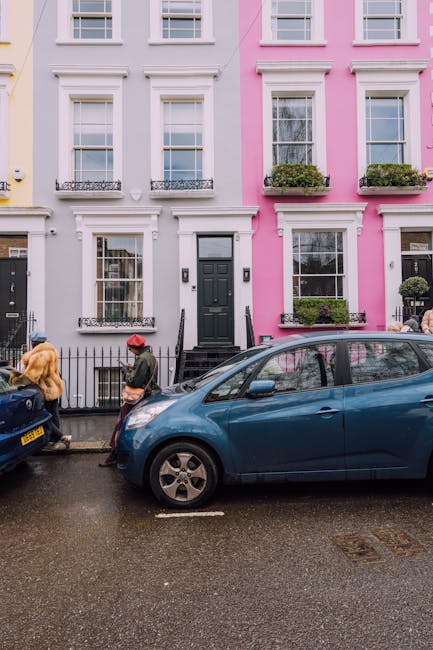
Do I need a street closure for a Notting Hill move?

If you are planning a move in Notting Hill, one of the first practical questions is simple enough: do I need a street closure for a Notting Hill move? The honest answer is, sometimes yes, but many moves do not need one at all. It depends on the size of the vehicle, how busy the road is, whether parking bays can be suspended, and how much space your removals team needs to load safely without causing chaos outside your front door.
Notting Hill has its own rhythm. Narrow streets, period terraces, tight parking, and the usual London mix of double yellows, cyclists, delivery vans, and neighbours trying to get on with their day. That means a move that would be straightforward in a quieter suburb can become a juggling act here. The goal is not to make the process feel bigger than it is, but to help you work out what is genuinely required, what is just helpful, and what can be handled with good planning.
In this guide, we will look at when a street closure is actually necessary, how it differs from other parking or access arrangements, what the usual process looks like, and how to avoid last-minute headaches. We will also cover the practical side: timing, permits, safety, neighbours, and the sort of small details that matter more than people expect. Truth be told, the best move is usually the one that has been thought through before the van turns up.
Why Do I need a street closure for a Notting Hill move? Matters
A street closure is not something you arrange casually. It changes how traffic and parking work outside the property, and it can make the difference between a move that feels organised and one that turns into a stand-off with passing cars. In a place like Notting Hill, where roads can be busy even on a quiet weekday, the decision affects everyone nearby.
Most people ask about closures because they are worried about space. That is sensible. If your removals van is large, your furniture is bulky, or you are moving from a house with no off-street loading area, you may need more than a basic parking arrangement. A street closure can create a protected loading zone, reduce the chance of obstructing traffic, and give the team room to work safely. It can also help with lifts, heavy wardrobes, awkward sofas, and the odd piano that always seems to arrive at the worst possible angle.
But here is the important bit: a street closure is often a last resort, not the default. Many Notting Hill moves can be handled with a suspended bay, a loading permit, a smaller vehicle, or a well-timed move when traffic is calmer. So the real question is not only whether you can get a closure, but whether you actually need that level of access control for your specific move.
For some households, over-ordering the wrong kind of access arrangement adds cost and admin without much benefit. For others, trying to squeeze everything into a tiny gap outside a terraced property can create delays, risk damage, and frustrate neighbours. That is why a clear assessment matters before move day.
How Do I need a street closure for a Notting Hill move? Works
In practical terms, a street closure means a section of road is temporarily restricted so loading, unloading, or moving operations can happen more safely and with less interference. Depending on the circumstances, this may be a full closure, a partial closure, or a temporary traffic management arrangement rather than a complete shut-off.
The exact process varies, but the general sequence is similar. You identify the road, the property, and the date. Then you assess whether a closure is genuinely required or whether parking controls, bay suspensions, or a permit will do the job. If a closure is needed, someone usually has to apply well in advance, provide details of the location and timing, and make sure the move can be carried out without creating a hazard. In London, that often means working around local authority expectations and whatever traffic or parking controls apply on the street.
For a moving day, the difference between a closure and a parking suspension is significant. A parking suspension reserves a space for the vehicle. A street closure restricts the use of the road itself, which is much more disruptive and therefore more closely controlled. That is why most domestic moves do not jump straight to a full closure.
If your move is especially tight, a man and van service or a smaller removals vehicle can sometimes reduce the need for more serious traffic measures. Likewise, if you are moving at a tricky time or from a property with limited access, combining the move with short-term storage can take pressure off the schedule and make the day much smoother.
What usually triggers the need for a closure?
- The road is too narrow for safe loading while keeping traffic moving.
- There is no workable off-street loading space.
- Large items need a protected area for lifting and manoeuvring.
- The move involves multiple vehicles or a long loading time.
- Pedestrian safety becomes a concern because the pavement is tight or heavily used.
Key Benefits and Practical Advantages
There are a few clear benefits to arranging the right access setup, whether that is a closure, a bay suspension, or another form of control. The first is obvious: it helps the move happen without constant interruptions. If you have ever tried to carry a mattress through a doorway while a delivery driver is waiting behind a van, you will know why this matters.
Second, it improves safety. A controlled frontage gives movers room to carry heavy items without stepping awkwardly into traffic or rushing because a car wants to pass. That matters for everyone involved, especially when staircases are steep, hallways are narrow, or the weather is doing its usual London thing and everything is a bit damp and slippery.
Third, it protects the property and the street. When teams have enough space, they are less likely to knock walls, scratch stair rails, or block neighbours in a way that causes complaints. It is a small thing, but in a close-knit street, goodwill is worth a lot.
Finally, the right arrangement can save time. A move that is delayed by access problems can quickly cost more in labour. If the team has to park half a street away and shuttle boxes back and forth, the day becomes longer for everyone. Nobody wants that.
Expert summary: In Notting Hill, the smartest access solution is usually the least disruptive one that still gives the removals team safe, direct working space. A full street closure is only worth it when the property, traffic conditions, or item size make anything smaller impractical.
Who This Is For and When It Makes Sense
A street closure is most likely to be worth considering for residents or businesses in roads where access is genuinely restricted. That might include a large house move on a busy residential street, a flat removal from a top-floor property with awkward access, or an office relocation where several vehicles need coordinated loading.
It can also make sense if you are moving during peak traffic times, or if the road layout leaves no practical place for a van to stop even briefly. Some Notting Hill streets are simply better suited to a small vehicle and quick loading; others are not. You can usually tell the difference once you stand outside with a tape measure and an honest eye. The street tells on itself, really.
For example:
- House removals: useful when furniture, boxes, and appliances need a protected loading area.
- Flat removals: worth exploring if stair access is awkward and the van cannot park nearby.
- Office removals: may need tighter control if the move involves equipment, crates, or multiple staff moving at once.
- Small removals: often do not need a closure at all, especially if a compact van can stop safely.
If you are unsure, a good first step is to think about the shape of the move rather than the postcode alone. A one-bedroom flat with light furniture is very different from a family house with three floors and a garden full of bikes, boxes, and that one table no one can lift properly. Same street, totally different challenge.
People who are moving out of rented flats also tend to benefit from flexible storage and removals planning. A property handover deadline can be awkward, so services like flat removals, removals and storage, or self storage can help bridge the gap if timing is tight.
Step-by-Step Guidance
If you want a straightforward answer to whether you need a street closure, work through the move in order. A lot of stress disappears once the practical questions are asked early.
- Assess the property access. Check how far the van would be from the front door, whether the pavement is narrow, and whether the road can safely accommodate loading.
- List the bulky items. Sofas, wardrobes, beds, appliances, desks, and fragile items may change the access plan.
- Decide on the vehicle size. A larger lorry is not always better. In some Notting Hill streets, a smaller vehicle is the smarter call.
- Check whether parking control is enough. Often a bay suspension or loading arrangement is more realistic than a closure.
- Speak to the removals provider early. An experienced team can tell you whether your street looks manageable or whether traffic control should be considered.
- Allow enough lead time. Access arrangements are not a last-minute job. The earlier you plan, the less likely you are to hit a dead end.
- Keep neighbours informed. A simple heads-up can prevent frustration on the day.
A useful rule of thumb: if the van can park within a sensible carrying distance and the team can work without blocking traffic or putting anyone at risk, a full closure is probably unnecessary. If not, keep exploring the more controlled options before committing to the bigger one.
If your move includes specialist items or you are trying to clear a property in stages, packing services and small removals can help reduce the pressure on move day. It sounds obvious, but lighter loads are easier to manage, and easier to manage is usually cheaper too.
Expert Tips for Better Results
In our experience, the smoothest Notting Hill moves are the ones where the access plan is treated as part of the move, not an afterthought. Small decisions make a big difference.
Measure the route, not just the room. A sofa may fit in the lounge, but the true question is whether it can get down the stairs, through the hallway, and into the van without a wrestling match. I've seen perfectly nice furniture become a problem because the front path was just a bit too tight. Annoying, but fixable if you know early.
Pick the right time of day. Early starts can help in busy parts of London. Less traffic, fewer parked-up delivery vans, more space to think. That said, some residents prefer later timings to avoid noise at the crack of dawn. There is no one perfect slot, just the least bad one.
Prepare the frontage. Move bins, scooters, planters, and loose items away from the loading area. It sounds minor, but removing clutter creates a cleaner, safer work zone and makes the street look far less chaotic.
Use storage as a pressure valve. If there is any uncertainty around completion timing, furniture volume, or access at the new place, temporary storage can stop the whole day from becoming too tight. Short-term storage is particularly helpful when dates do not line up neatly.
Do not default to the biggest vehicle. Bigger vans are not automatically more efficient in dense London streets. Sometimes a medium van, two trips, and better access beat one giant vehicle that cannot get close enough.
Think about neighbours. A polite note through the door or a quick verbal heads-up can go a long way. People are usually more forgiving when they know what is happening and when.
Common Mistakes to Avoid
Most access problems are not mysterious. They are the result of assumptions, usually made too late. A few common mistakes show up again and again.
- Leaving access planning until the day before. By then, your options may be limited.
- Assuming a street closure is always required. It often is not.
- Forgetting about parking restrictions. Even if the street looks free, the rules may not be.
- Choosing a vehicle that is too large for the road. This is a classic one.
- Not measuring furniture properly. That wardrobe may be "fine" until it reaches the staircase.
- Ignoring loading time. If the move is long, a small access gap can become a major issue.
- Not telling residents or building managers. Surprises on move day rarely go down well.
Another mistake is thinking that because a move is local, it must be simple. Local does not always mean easy. A move across Notting Hill can be more awkward than a longer journey if access is tight. That is just how it is.
Tools, Resources and Recommendations
You do not need a lot of fancy kit to decide whether a street closure is necessary, but a few practical tools make the process much easier.
- Measuring tape: useful for doors, hallways, stair turns, furniture, and vehicle clearance.
- Floor plan or room list: helps you think through what actually needs moving.
- Calendar or timeline: especially important if you are coordinating completion dates, building access, and storage.
- Photos of the frontage: a quick set of images can help a removals team judge the road layout.
- Inventory list: useful for prioritising heavy, fragile, or awkward items.
As a practical recommendation, speak to a provider that understands local removals rather than trying to interpret every issue alone. Services such as local removals and removals are often a better fit for London streets where access details matter as much as the mileage.
If your move also involves items that should not sit in the property for long, secure holding options like secure storage or household storage can be useful. And if the move is business-related, office storage and business storage may take the pressure off the schedule a bit.
Law, Compliance, Standards and Best Practice
For moves in London, access arrangements are not just about convenience. They also sit inside a wider framework of road safety, parking controls, and the duty to avoid unnecessary obstruction. The exact permissions or requirements can vary depending on the road, the local authority, and the nature of the works. So it is sensible to treat this as a compliance issue as well as a logistics one.
In plain English, that means you should not assume you can simply block a road because the van needs space. Any street closure, traffic restriction, or parking suspension should be properly planned and authorised where necessary. The same applies to keeping pavements usable, avoiding unsafe lifting conditions, and making sure the move does not create a hazard for pedestrians, cyclists, or passing vehicles.
Best practice usually includes:
- checking local restrictions early,
- planning safe loading and unloading,
- giving neighbours reasonable notice where possible,
- using the smallest suitable vehicle,
- and keeping the working area tidy and clearly managed.
It is also worth checking insurance and safety arrangements before the move. A company that takes this seriously should be able to explain how they handle property protection, loading risks, and transport cover. If you want to understand that side in more detail, the information on insurance and safety and the health and safety policy is a sensible place to start.
For general service terms and expectations, terms and conditions, pricing and quotes, and payment and security are also useful pages to review before you commit. It is not exciting reading. Nobody's idea of a perfect Friday night. But it saves misunderstandings later.
Options, Methods and Comparison
If you are weighing up the best access method for a Notting Hill move, it helps to compare the main options side by side.
| Option | Best for | Pros | Limitations |
|---|---|---|---|
| Street closure | Very tight roads, major loading needs, complex moves | Maximum working space, better safety, fewer interruptions | Most disruptive, may require more planning and approval |
| Parking suspension | Ordinary domestic moves with limited kerb space | Reserves loading space, less disruptive than a closure | Does not remove traffic from the road |
| Smaller vehicle | Narrow streets and lighter moves | Easier access, often simpler to arrange | May require more trips |
| Storage-assisted move | Moves with timing gaps or bulky furniture | Reduces pressure on move day, improves flexibility | Involves extra handling and a separate storage step |
For many people, the sweet spot is a combination of smaller vehicle plus temporary storage. That can be especially useful if you are moving out before your new place is fully ready, or if your furniture is not going in straight away. Options like mobile self storage and removals and storage are worth considering if the timeline feels messy.
And yes, sometimes a closure is still the right answer. But you should arrive there by process, not by panic.
Case Study or Real-World Example
Imagine a family moving from a Victorian terrace in Notting Hill on a Saturday morning. The property sits on a narrow road with parked cars on both sides, and the front entrance is only a few steps from the carriageway. They have wardrobes, a dining table, several boxes of books, and a sofa that looked sensible in the living room but now appears to have doubled in width.
At first glance, they think they need a full street closure. But after checking the layout, they realise a smaller removals vehicle can stop briefly at the kerb, and a temporary bay suspension gives enough working space for loading. They also decide to move a few non-essential items into short-term storage the day before, which lightens the load and shortens the time the van needs to stay outside.
The result? No blocked street, less neighbour frustration, and a calmer moving morning. The team can carry items directly, the family avoids scrambling around in the road, and the whole job feels controlled rather than frantic. That is the sweet spot in a lot of Notting Hill moves: enough planning to avoid drama, not so much admin that the move becomes a project in itself.
Now, if the same family had three large vehicles, a bigger property, and a street with very little kerb access, the answer might have been different. That is why context matters.
Practical Checklist
Use this checklist before you decide whether a street closure is needed.
- Have you measured the access route from the property to the vehicle?
- Do you know how wide the street is and whether parking is possible nearby?
- Have you listed all bulky or awkward items?
- Do you know whether a smaller vehicle would solve the problem?
- Have you checked whether a parking suspension would be enough?
- Is the move happening at a busy time of day or week?
- Have you spoken to the removals provider about access and timing?
- Are there neighbours, building managers, or concierges who should be informed?
- Would short-term storage reduce pressure on the day?
- Do you have any insurance or safety questions answered in advance?
If you can tick most of those off, you are already ahead of the game. And if not, no drama. Better to slow down now than to improvise in the rain while someone is trying to reverse a van into a gap that turns out not to exist.
When your move needs extra support, services like house removals, furniture storage, and long-term storage can help you build a plan that fits your timing and space. That kind of flexibility is often the difference between a stressful day and a surprisingly manageable one.
Conclusion
So, do I need a street closure for a Notting Hill move? Sometimes, but far less often than people first imagine. In many cases, a parking suspension, a smaller vehicle, better scheduling, or storage support will do the job without turning the street into a construction site.
The key is to assess the access properly and early. Notting Hill moves reward planning. The more you understand the road, the loading space, the furniture, and the timing, the easier it becomes to choose the right option rather than the loudest one. And that is usually what you want: calm, safe, workable.
If you are still weighing up your options, start with the practical details and let the access plan follow from there. A tidy decision now saves a lot of shuffling later. That's the real trick, if we're honest.
Get a free quote today and see how much you can save.
Frequently Asked Questions
Do I always need a street closure for a move in Notting Hill?
No. Many moves can be managed with a parking suspension, a loading arrangement, or a smaller vehicle. A full closure is usually only needed when the road is very tight or the move is unusually complex.
What is the difference between a street closure and a parking suspension?
A parking suspension reserves specific parking space for your vehicle. A street closure restricts use of the road itself, which is more disruptive and usually only used when loading access is especially difficult.
How do I know if my street is too narrow for a removals van?
Look at whether a van can stop safely without blocking traffic, whether there is space to open doors, and whether movers can carry items without stepping into the road. If the answer is no to any of those, you may need a better access plan.
Can a small move still need a street closure?
It can, but it is uncommon. Small removals usually need less space and less time, so they often work with simpler arrangements. Still, if the street is very restrictive, access may be the deciding factor.
How far in advance should I plan access for a Notting Hill move?
As early as possible. Access planning should happen before move day is locked in, especially if you may need a closure, parking suspension, or any kind of special arrangement.
Will a street closure make my move faster?
Usually yes, because the team has a clearer working area and fewer interruptions. That said, it should only be used if the extra control is justified, not just because it sounds convenient.
What if I am moving from a flat with no parking outside?
That is a common London problem. In that case, a smaller vehicle, a timed loading space, or temporary storage can be more practical than a full street closure.
Is it better to use storage if my move is complicated?
Often yes. Storage can help if dates do not line up, if you need to clear rooms in stages, or if the new property is not ready. It reduces pressure and can make access needs less severe.
Do office moves need street closures more often than house moves?
Sometimes they do, especially if equipment, multiple staff, or several vehicles are involved. But plenty of office moves work fine with planned loading and the right vehicle size.
What should I ask a removals company about street access?
Ask whether they think a closure is really necessary, what vehicle size they recommend, whether parking control is enough, and how they handle safety and loading on busy streets.
Are there safety issues with loading on a busy street?
Yes. The main concerns are vehicle movement, pedestrian safety, blocked sightlines, and lifting heavy items near traffic. That is why access planning matters so much.
What is the most common mistake people make with Notting Hill moves?
Leaving access planning too late. People often focus on boxes and dates first, then discover the street is trickier than expected. A little early planning usually fixes that.