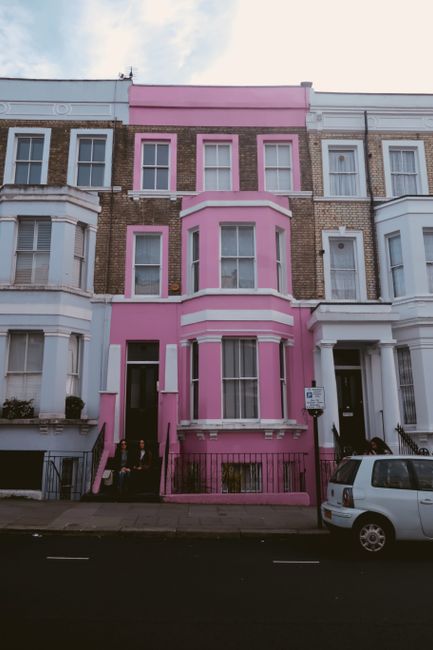
How we moved a Notting Hill Victorian house on Portobello Rd

Moving a Victorian house in Notting Hill is never just a "move day" job. On Portobello Rd, you are dealing with period staircases, tight front steps, parked cars that seem to appear from nowhere, and a street rhythm that changes by the hour. In this guide, we break down how we moved a Notting Hill Victorian house on Portobello Rd in a way that is practical, realistic, and useful if you are planning a similar move. Whether you are comparing removal options, worried about access, or simply trying to avoid a stressful day with boxes everywhere, this article walks you through what matters and why.
You will find the planning steps, common problems, local considerations, and the best ways to protect your furniture and your sanity. Truth be told, a well-run move in this part of London is less about brute force and more about timing, coordination, and knowing where the bottlenecks are.
Why How we moved a Notting Hill Victorian house on Portobello Rd Matters
Victorian homes in Notting Hill are beautiful, but they are not forgiving. High ceilings, narrow hallways, original staircases, sash windows, basement rooms, and awkward turns can make even a straightforward removal feel like a small logistical puzzle. Add Portobello Rd into the mix and you have traffic flow, loading limitations, footfall, market-day pressure, and the everyday reality of a busy London street. It matters because the cost of getting one detail wrong can be more than inconvenience; it can lead to delays, extra labour, damaged furniture, or a move that drags on longer than expected.
For many homeowners, the phrase "we'll just get it moved" sounds reasonable until the van arrives and the sofa will not make the turn. That is where local experience helps. A properly planned move in this area is not just about lifting boxes. It is about route planning, access timing, protection, parking arrangements, and selecting the right moving method for the property itself.
There is also the emotional side, to be fair. A Victorian house often carries years of lived-in stuff, and a move can uncover all sorts of decisions you did not want to make that week. You know the scene: one cupboard full of things you forgot you owned, a heavy mirror that has moved house three times already, and a pile of books that somehow multiplied overnight. Moving well in a place like Portobello Rd is as much about reducing friction as it is about transport.
Key point: the better you understand the specific demands of a Notting Hill Victorian move, the easier it is to choose the right team, the right schedule, and the right level of support.
How How we moved a Notting Hill Victorian house on Portobello Rd Works
The process usually starts long before the van turns up. In a tight London setting, the move works best when it is treated as a sequence of small decisions rather than one big event. First comes the survey or assessment, where access, volume, fragile items, parking, and timing are reviewed. Then comes packing and preparation. Then loading, transit, and unloading. Simple on paper. Less simple in real life.
For a house on Portobello Rd, the access issue is often the deciding factor. Can the vehicle stop close enough? Is there room to safely carry items without blocking the pavement? Are there stairs with sharp corners? Is the kitchen extension full of awkward appliances? These questions shape the entire move plan. If the answer to one of them is "not really", the plan needs adjusting rather than hoping for the best. Hope is not a removal strategy. It just isn't.
In practice, a good move often combines more than one service. For example, house removals may cover the main relocation, while packing services help reduce breakages and speed up the day. If the new property is not ready immediately, removals and storage can bridge the gap without turning your living room into a temporary warehouse.
One thing worth noting is that Victorian houses are not all the same. Some have generous rooms but tight stairs. Others have narrow corridors and surprisingly bulky internal doors. You often only discover the real problem item when someone is halfway down the hall with it. That moment, while slightly comic in hindsight, is exactly why planning matters.
Key Benefits and Practical Advantages
When a move like this is handled properly, the benefits are quite immediate. You save time, reduce stress, and lower the chances of damage. But the practical advantages go deeper than that.
- Less handling risk: fewer failed attempts to get furniture through narrow spaces means less chance of scratches, chips, or bent fittings.
- Better schedule control: planning around traffic, parking, and access reduces the "waiting around with a couch" problem.
- Cleaner packing decisions: you are more likely to sort, label, and prioritise properly when you know the layout of the move.
- Lower disruption: a well-ordered move keeps the household moving, even when the building itself is awkward.
- More predictable costs: clear access and clear scope usually make it easier to avoid surprise labour charges.
There is also a quieter benefit: confidence. If you have ever tried to move a heavy wardrobe around a corner while someone mutters, "it should fit", you will know how quickly confidence can drain away. A proper plan restores some of that. It makes the whole day feel manageable.
For many people in W11, the biggest win is not speed alone. It is avoiding the domino effect: one blocked entrance becomes late loading, late loading becomes extra time, and extra time becomes cost. Good planning breaks that chain early.
Who This Is For and When It Makes Sense
This approach makes sense for homeowners, landlords, tenants, and property managers dealing with period homes in Notting Hill. It is especially relevant if your property has original features, basement storage, loft rooms, or a layout that makes furniture movement awkward. It also suits anyone with limited parking outside, a busy moving window, or a closing date that leaves little room for delay.
You might particularly benefit from this style of move if:
- you are moving a family home with a mixture of delicate and bulky items;
- you need help with access planning on a tight street;
- you are combining the move with storage because dates do not line up;
- you have high-value or sentimental items that need careful handling;
- you want to avoid multiple trips and reduce the time spent on the road.
It is also a sensible choice if you are moving within the local area and want a team that understands the realities of the neighbourhood. The difference between a smooth local move and a messy one is often something tiny: knowing when the street is busiest, where a van can safely wait, and how to work around the properties themselves. Small things, big difference.
If you are moving from a period terrace, a maisonette, or a converted flat, the same logic applies. In some cases, a lighter man and van option may be enough; in others, a full local removals service is the more sensible choice.
Step-by-Step Guidance
Here is the practical flow we would use for a Notting Hill Victorian property move on Portobello Rd.
- Assess the property properly. Measure large furniture, note stair turns, check access points, and identify items that may need dismantling.
- Map the street logistics. Work out where the vehicle can stop, how long loading may take, and whether the chosen time avoids unnecessary congestion.
- Decide what needs packing support. Fragile items, artwork, books, kitchenware, and glass should be packed with care and the right materials.
- Separate essentials from non-essentials. Keep a first-night box with documents, chargers, toiletries, basic kitchen items, and a change of clothes.
- Choose the right storage plan if needed. If completion dates do not match, book short-term or secure storage rather than improvising.
- Prepare the building. Protect floors, clear corridors, and make sure access routes are free of clutter and trip hazards.
- Label clearly. Room labels are useful, yes, but simple priority notes such as "open first" or "fragile" help more than most people expect.
- Confirm timing the day before. A quick check on arrival windows, access details, and contact numbers saves a lot of confusion.
- Load in a sensible order. Heavy and robust items go first, fragile items protected and secured, and essentials positioned for easy unloading.
- Do a final walk-through. Check cupboards, lofts, behind doors, and outdoor spaces. People forget these all the time. Every time.
One useful clarification: moving a Victorian house well does not mean rushing. It means sequencing. If you rush the packing stage, you usually pay for it later with breakages or delays. If you rush the loading stage, you often create access problems. Slow is not always slow. Sometimes it is simply efficient.
Expert Tips for Better Results
After enough local moves, a few patterns become obvious. The first is that large period homes reward early sorting. The second is that fragile items need more attention than people think. And the third? There is almost always one object everyone has forgotten to measure.
Here are some practical tips that genuinely help:
- Measure awkward furniture before the packing starts. That includes sofa arms, bed frames, mirrors, and wardrobes.
- Do not rely on memory. Write down which rooms have fragile items and which boxes must be opened first.
- Protect floors and stairs. Period surfaces can be sensitive, especially where old timber, paintwork, or stone is involved.
- Keep valuables separate. Passports, jewellery, private papers, and irreplaceable items are better carried personally.
- Allow a little breathing room. In a busy London street, a ten-minute delay can snowball fast.
It also helps to be realistic about what you are moving. A Victorian home can hide a lot of volume in cupboards, cellars, and eaves. If you have not done a proper declutter, the move may feel twice as big as you expected. That is normal, really. Most people underestimate the amount of stuff they own until the boxes begin to stack up.
When the move includes storage, use it as a planning tool rather than a dumping ground. Well-organised short-term storage or secure storage can make the whole process calmer, especially if you are staging rooms or waiting on keys.
Common Mistakes to Avoid
Most moving problems are preventable. That is the annoying part. The good news is that once you know the usual mistakes, they are easier to sidestep.
- Underestimating access issues. A wide item may still fail at a stair landing or tight doorway.
- Leaving packing too late. Last-minute packing often leads to damaged items and poor labelling.
- Ignoring parking and loading realities. In a busy area like Portobello Rd, this is asking for trouble.
- Choosing the wrong size service. Too small and you risk multiple trips; too large and you may be paying for more than you need.
- Forgetting dismantling requirements. Beds, wardrobes, and some shelving systems usually need attention before moving day.
- Mixing essentials with everything else. You do not want to spend your first night hunting through ten mystery boxes for phone chargers.
Another mistake is assuming every removal quote covers the same things. It often does not. Some quotes include packing materials, dismantling, or waiting time; others do not. Ask, check, and ask again if needed. No shame in that. In fact, it is smart.
For anyone comparing options, it can help to review how to avoid hidden fees when booking Notting Hill movers before confirming anything. It is a small read that can save a lot of irritation later.
Tools, Resources and Recommendations
You do not need a van full of specialist equipment to move well, but the right basic tools make a real difference. The essentials are often simple: protective blankets, tape, markers, stretch wrap, furniture covers, trolleys, straps, and a few decent boxes that do not collapse the minute they are loaded.
Here is a practical list worth having on hand:
- Packing materials: boxes, paper, bubble wrap, tape, labels, mattress covers, wardrobe covers.
- Handling aids: sack barrow, furniture dolly, lifting straps, gloves.
- Protection items: floor runners, door guards, blankets, corner protectors.
- Organisation tools: marker pens, inventory sheet, colour labels for rooms.
On the service side, useful support can include professional packing help, furniture storage, and household storage where items need to be held safely between dates. If the move is relatively light, small removals can be a better fit than a full-scale vehicle and crew.
For readers who like a bit more local context, the blog section also covers practical neighbourhood topics such as moving day guidance for Portobello Road and tight-access tips nearby. Those kinds of local notes are often more useful than generic moving advice, because they reflect the actual street conditions you are likely to face.
Law, Compliance, Standards, or Best Practice
For a move like this, the most relevant compliance concerns are practical rather than dramatic. You need to think about safe lifting, safe access, insurance, and any local parking or loading restrictions that apply on the day. In the UK, removal work should follow sensible health and safety practice, with risk assessed and equipment used appropriately. That includes protecting staff, residents, neighbours, and the property itself.
Best practice usually means:
- checking that the removal team has appropriate insurance for the job;
- confirming how fragile or high-value items will be handled;
- making sure access routes are safe and free of hazards;
- using suitable packing and lifting methods for heavy or awkward items;
- agreeing clear responsibilities before the move starts.
If waste or unwanted furniture is involved, do not assume it can be left anywhere. Bulky waste disposal needs to be handled properly, and local rules can differ depending on the item and location. It is worth reading how to dispose of bulky waste after a Notting Hill move before you start putting things by the kerb.
Insurance is another area people sometimes skim over. If you are comparing removal options, take time to understand insurance and safety arrangements rather than assuming every provider covers the same level of risk. That tiny bit of admin can save a large headache later.
Options, Methods, or Comparison Table
There is no single right way to move a Notting Hill Victorian house. The best method depends on volume, access, urgency, and whether storage is needed. Here is a simple comparison to help you choose.
| Method | Best for | Strengths | Limitations |
|---|---|---|---|
| Full house removals | Larger family homes, full contents, complex access | Efficient, organised, less stress on the day | Can cost more than lighter options |
| Man and van | Smaller loads, lighter moves, quick local jobs | Flexible, often simpler to arrange | May be less suitable for large period furniture |
| Removals plus storage | Gap between completion dates, decluttered moves, staged moves | Useful when timing does not line up | Requires extra planning and coordination |
| Packing-led move | Fragile contents, busy households, time-poor clients | Better protection, faster move day | Needs advance booking and clear instructions |
If you are not sure which route fits, a good starting point is to compare the complexity of the property, not just the quantity of boxes. A compact flat with a tricky stairwell can take more effort than a larger home with easy access. That surprises people every year.
Case Study or Real-World Example
Here is a realistic example based on the kind of move people often face on Portobello Rd. A household is relocating from a Victorian terrace with three floors, a basement utility room, and a mix of large furniture and fragile decorative pieces. The completion date is tight, the new property is not ready for everything at once, and street space is limited.
The practical solution is to split the move into phases. First, the most essential items are packed and loaded with care. Second, larger furniture is assessed for dismantling. Third, the items that are not needed immediately are placed into storage while the family settles into the new home. This avoids overcrowding the destination property and removes the pressure to finish everything in one exhausting day.
What makes the move work is not a heroic effort. It is the boring stuff done well: measuring the staircase before moving day, labelling rooms clearly, confirming the van access window, and keeping a small box of essentials separate. Nothing flashy. Just the stuff that saves time.
And yes, there is usually one item everyone underestimates. In this sort of house it is often a wardrobe, a piano, or a painting that looked smaller on the wall than in the hallway. Happens all the time.
For more local context on planning around the neighbourhood, planning and parking tips for nearby streets can be useful reading as well.
Practical Checklist
Use this as a last-check list before move day. Simple, but effective.
- Measure large furniture and doorways
- Confirm access, parking, and loading arrangements
- Book packing help if fragile items need special care
- Arrange storage if dates do not line up
- Label boxes by room and priority
- Pack a first-night essentials box
- Protect floors, stairs, and corners
- Separate valuables and important documents
- Check insurance and service scope
- Walk through every room before departure
Quick reminder: if the move involves more than a few heavy items, do not leave dismantling until the final hour. That last-hour scramble is where things get tense, and nobody needs that.
Conclusion
Moving a Notting Hill Victorian house on Portobello Rd is perfectly doable, but it rewards planning, patience, and a realistic approach to access. The property itself, the street, and the timing all matter. Once you accept that, the move becomes much easier to manage. You are no longer trying to force a square peg through a round hole. You are building a plan that fits the building, the road, and your actual life.
The best outcome is usually the calmest one: clear packing, sensible sequencing, good communication, and enough flexibility for the odd London surprise. Because there will be one, probably. Maybe two.
Get a free quote today and see how much you can save.
If you are preparing your own move, start with the access questions first and the boxes second. That tiny shift in thinking can make the whole day feel more under control, and honestly, that is worth a lot.
Frequently Asked Questions
How far in advance should I plan a Notting Hill Victorian house move?
As early as possible. Period homes and busy streets need more coordination than a standard move, especially if parking, storage, or packing help is involved. Even a little extra lead time can make the whole thing noticeably smoother.
Do Victorian houses on Portobello Rd need special moving equipment?
Not always special, but often suitable. Protective covers, trolleys, straps, floor protection, and the right packing materials are usually more important than anything exotic. The real question is whether the access route and furniture size match the equipment being used.
Is a man and van enough for this type of move?
It can be, if the move is light and the access is straightforward. For larger contents, awkward furniture, or multiple floors, a fuller removals service is usually the safer and more efficient option.
How do I avoid damage to stairs and walls in a Victorian house?
Use proper protection before items start moving, not afterwards. Stair runners, corner guards, blankets, and careful handling all help. A rushed move is where most scuffs happen, so pace matters more than people think.
What if my completion date changes at the last minute?
That is one of the main reasons people use storage. A flexible plan with short-term or secure storage gives you breathing room if key dates shift. It is far less stressful than trying to force everything into a single day.
How do I know whether I need packing services?
If you have fragile items, limited time, or a large amount of household contents, packing support can be a real help. It is especially useful when the property is full of awkward objects that need careful wrapping and labelling.
Can storage be combined with removals on the same day?
Yes, and in many cases it makes a lot of sense. This is a common solution when the new home is not ready for everything or when you want to stage the move in phases. It keeps the process flexible.
What should I pack separately and keep with me?
Keep essential documents, valuables, chargers, medication, keys, toiletries, and a change of clothes with you. Anything you would be annoyed to lose for a day or two should not go into the main van load.
Are removal quotes for Portobello Rd usually higher because of access?
They can be, depending on the property and street conditions. Access difficulties, parking limitations, and the need for extra handling often affect pricing. The best way to understand this is to get a quote that reflects the actual job, not a generic estimate.
What are the biggest mistakes people make on moving day?
The biggest ones are underestimating access, leaving packing too late, forgetting essentials, and not checking parking or loading details. A move usually goes badly in small ways first, then all at once. The good news is that most of that is preventable.
How can I make moving day feel less chaotic?
Keep the plan simple. Label clearly, sort the essentials box, protect the property before lifting anything, and confirm the route and timing the day before. A calm move is rarely accidental. It is usually the result of a few sensible decisions made early.
Where can I find more local advice for moving in Notting Hill?
Local guidance is especially useful for streets with tight access or loading limits. You can look through the site's Notting Hill moving resources and related service pages, including local removals, storage, and packing support, to build a plan that suits your situation.